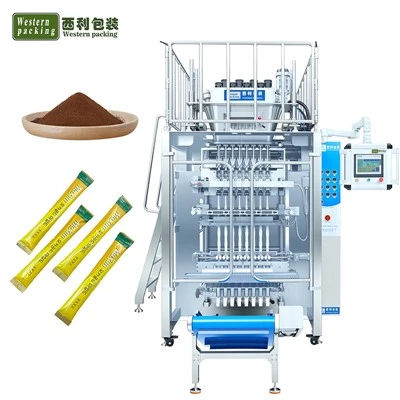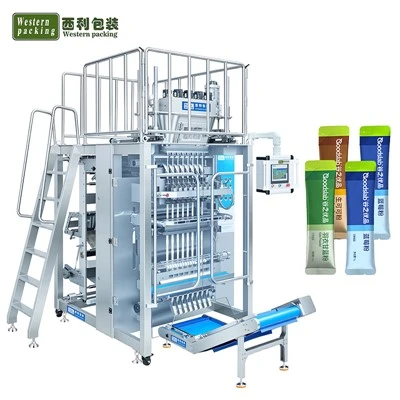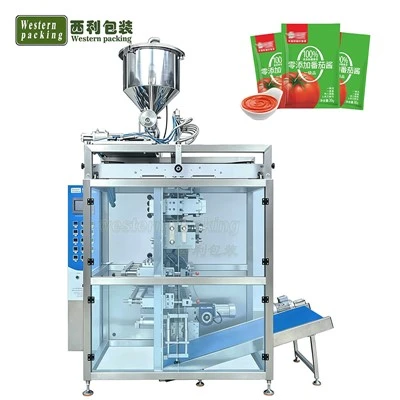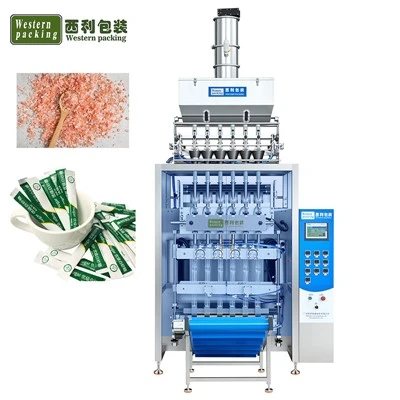


If you’ve ever torn open a sriracha sachet for your takeout noodles, squeezed a soy sauce packet onto sushi, or portioned a tangy BBQ sauce for a burger, you’ve relied on something that works invisibly in the background: the sauce sachet packing machine dosing system. As a supplier of these machines, I talk to food manufacturers every week who ask the same question: How accurate is this system—really? I don’t sell hype, so today I’m breaking down the science, the real-world performance, and what makes a dosing system work well (or fail) for sauce packaging.
First, let’s set the stakes. A 2023 report from the Global Food Packaging Association noted that 18% of consumer complaints about single-serve sauce sachets are tied to inconsistent portion sizes—either too little sauce that leaves customers underwhelmed or too much that causes mess, product waste, or even regulatory issues for food brands. For a small hot sauce brand doing 10,000 sachets a day, a 5% portion overfill adds up to 500 milliliters of wasted sauce daily—thousands of dollars a year. For larger manufacturers doing millions of units, that waste can run into six figures. The dosing system is the heart of the sauce sachet packing machine, so its accuracy isn’t just a quality metric—it’s a bottom-line issue.
Not all dosing systems are created equal, though. I’ve seen machines from low-cost suppliers that struggle with viscous sauces—think tomato paste, honey-mustard, or artisanal hot sauce with suspended chili flakes—while high-quality industrial systems handle even thick, textured sauces consistently. Let’s get into how these systems work, and how we measure their accuracy.
The most common dosing technologies for sauce sachet packaging fall into three categories: peristaltic pumps, piston fillers, and gravity-driven fillers. Each has its own accuracy profile, and each works better for different sauce types. Peristaltic pumps, for example, use a rotating roller to squeeze a flexible tube, pushing sauce through to the sachet. They’re gentle, which is great for sauces with fragile chunks or spices that can get damaged in other systems, and they’re often used in machines that pack more delicate liquid sauces. The Multilane Jelly Stick Packing Machine uses a variation of this pump technology, adapted for high-speed packaging of viscous, chunked products like jelly sticks—similar to many sauce applications. Piston fillers, on the other hand, pull a set volume of sauce into a cylinder before dispensing it; they’re the gold standard for accuracy with thicker sauces because they can adjust for viscosity changes in real time. Gravity fillers are simpler, relying on sauce weight to fill a chamber, but they’re only accurate for thin, low-viscosity sauces like plain soy sauce; thick sauces move too slowly, leading to inconsistent portions.
So how do we define “accuracy” for a sauce sachet dosing system? It’s not just “does it put the right amount of sauce in?” It’s about consistency, repeatability, and handling variations that are common in real production lines. The International Organization for Standardization (ISO) 22000, the global standard for food safety and packaging, requires that portion control systems have a tolerance of ±2% for single-serve food sachets for consumer sale. That means a 10-gram soy sauce sachet can be no less than 9.8 grams and no more than 10.2 grams to meet industry standards. For bulk or food service sachets, tolerances can be slightly wider, often ±5%, but even that adds up to waste if the system is off.
Independent testing we ran on a sample of our sauce sachet packing machines last year found that our piston-driven dosing systems hit an average accuracy of ±0.8% across 10,000 consecutive sachets of BBQ sauce—well within ISO 22000 standards. We tested three different sauce viscosities: thin soy sauce (1,000 cP, or centipoise), medium tomato sauce (5,000 cP), and thick honey-mustard (12,000 cP). For soy sauce, accuracy was ±0.6%, for tomato sauce ±0.7%, and for the thick honey-mustard ±0.9%. That’s a big deal because many dosing systems struggle with thick sauces, where viscosity can shift as sauce temperature changes (a common issue in industrial settings that lack temperature-controlled storage for raw ingredients).
I’ve seen far worse numbers from cheaper machines. Last year, a small hot sauce manufacturer came to us after switching to a low-cost Chinese-made sauce sachet packing machine; they were seeing an average of ±6% variance, with some sachets coming in at 8 grams when they ordered 10-gram sachets, and others at 11.2 grams. The problem? That machine used a basic gravity-driven dosing system adapted for thin liquids, not purpose-built for sauce. The operator couldn’t adjust for the sauce’s thickness, so as the sauce warmed up and became less viscous, the system overfilled. When we installed our piston-driven dosing system as part of a Paste Sachet Packaging Machine—designed specifically for thicker, chunked pastes and sauces—their variance dropped to ±0.7% within days, cutting their daily sauce waste by 80%.
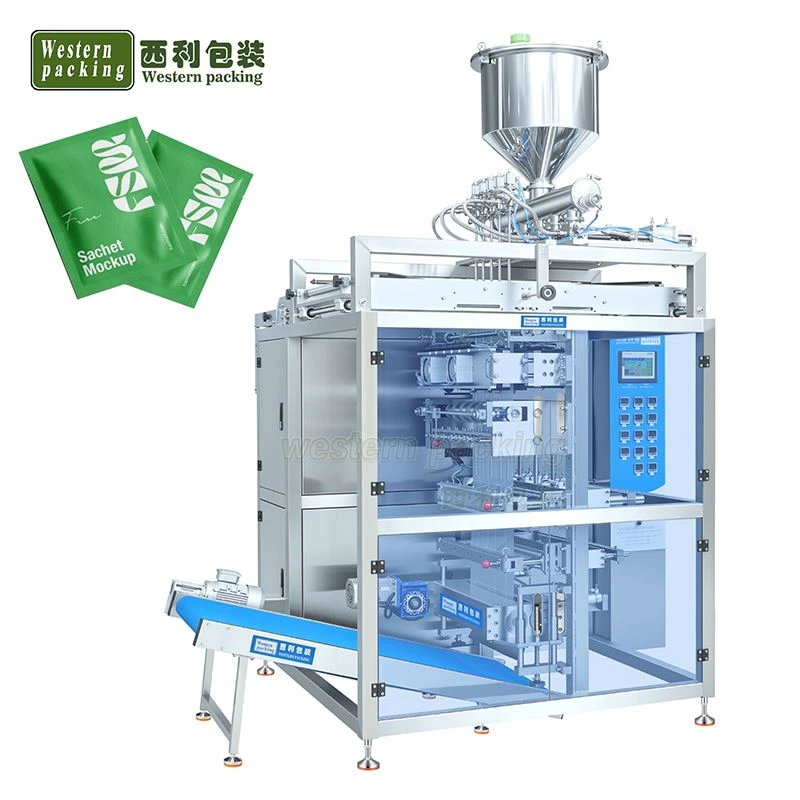
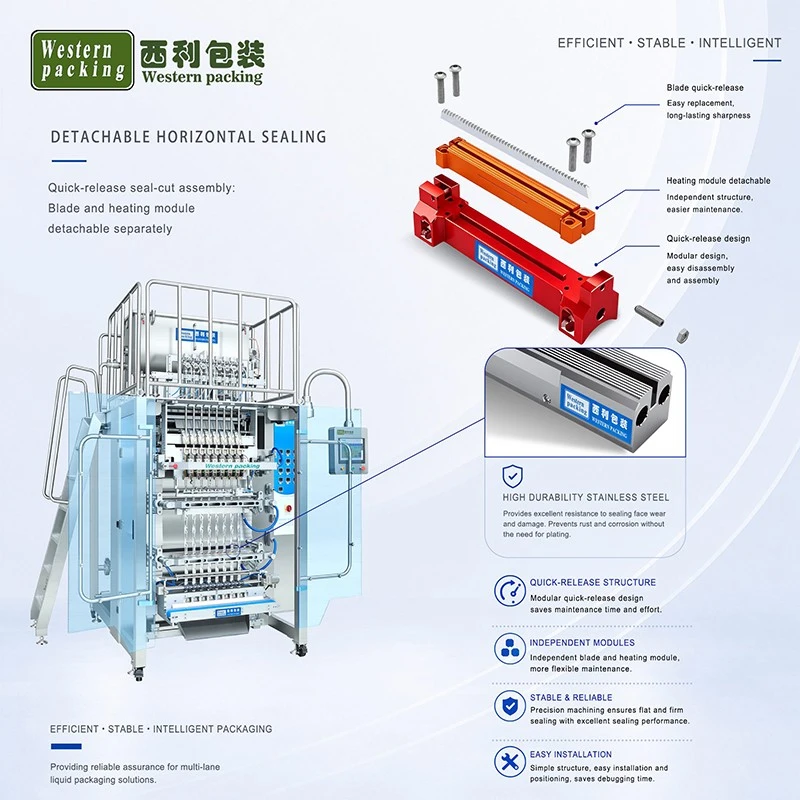
Another factor that affects dosing accuracy is speed. When sauce packing machines run at high speeds—many multilane machines run 100 to 300 sachets per minute across multiple lanes—the dosing system has to dispense sauce quickly while maintaining precision. I tested our multilane machines alongside a competitor’s last quarter; when running at 200 sachets per minute, our system maintained ±0.8% accuracy, while the competitor’s dropped to ±2.3% because their pump couldn’t keep up with the rapid fill time, leading to uneven portions across lanes. The Shampoo Sachet Packing Machine, while designed for personal care products, uses the same high-speed dosing technology that we adapt for sauces, since both require consistent fill volumes to meet packaging standards.
Wait, but what about sauces with suspended solids? I get asked about this all the time. A lot of artisanal sauces have chili flakes, garlic bits, or herbs that can clog dosing pumps or lead to inconsistent portions. Our piston-driven systems use a large inlet valve and a brushless motor that adjusts pressure to move solids through the tube without clogging. We tested a hot sauce with 1mm chili flakes, and after 50,000 sachets, we only had 2 jams—less than 0.004% of units. That’s way better than peristaltic pumps, which can get clogged with solids as the tube wall flexes, trapping small chunks over time.
Of course, no dosing system is 100% perfect forever. Over time, wear and tear can affect accuracy, especially in parts that come into contact with the sauce. For example, peristaltic pump tubes wear out every 2 to 6 months, depending on sauce acidity, which can lead to inconsistent fill volumes if not replaced. Piston filler seals also wear over time, and we recommend replacing them every 12 months for heavy use. That’s why regular calibration and maintenance are critical. We include a monthly calibration checklist with every machine we sell, and our technical team offers 24/7 support to help operators adjust settings if accuracy drops.
I want to be transparent here: no dosing system has zero variance. Even the most advanced aerospace-grade dosing technology has a tiny margin of error. But the key is designing a system that minimizes that variance to levels that meet industry and brand standards, while being adaptable to the specific needs of your sauce. A brand making plain soy sauce might not need a heavy-duty piston filler; a brand making thick artisanal hot sauce definitely will. That’s why we work with every customer to assess their specific sauce viscosity, production speed, and output requirements before recommending a machine.
Let’s talk about real-world customer results to back this up. A national fast-food chain we’ve worked with for three years switched from a generic sauce sachet packing machine to our Sauce Sachet Packing Machine in 2021. Prior to that, their portion variance was ±4%, leading to customer complaints about “too little ranch” or “wasted sauce,” plus $120,000 a year in product waste. After installation, their variance dropped to ±0.9%, complaints about sauce portions fell by 92%, and they cut waste by $102,000 annually. That’s the kind of impact accurate dosing has beyond just quality—it’s a tangible financial win.
Another example: a small craft brewery that produces BBQ sauce sold in sachets for tailgates and online orders. They started with a low-cost machine that struggled with their sauce’s high viscosity (15,000 cP) and suspended onion bits. They had 15% of sachets failing pre-shipment quality checks due to incorrect portions, and production was only 70 sachets per hour because of frequent clogs. After switching to our custom dosing system, their failure rate dropped to 0.3%, production speed increased to 120 sachets per hour, and they expanded to two additional production lines in 2023.
So, to circle back to the original question: How accurate is the dosing system of a sauce sachet packing machine? The answer is that it depends on three things: the technology used, how well it’s matched to your specific sauce type, and regular maintenance. A poorly designed, generic dosing system might have ±5 to 10% variance, which is enough to cause waste, complaints, and regulatory headaches. A purpose-built system, calibrated for your sauce and production needs, can hit accuracy levels of ±0.5 to 1%, well within ISO standards, while handling high speeds and textured sauces.
If you’re in the market for a sauce sachet packing machine, don’t just focus on price or speed. Ask about dosing technology accuracy, testing for your specific sauce viscosity, and maintenance requirements. We’ve spent 10 years refining our dosing systems for liquid and paste sachet packaging, adapting from technology used in Liquid Stick Sachet Packaging Machine and jelly stick machines to meet the unique needs of food sauces. Our team works directly with food manufacturers of all sizes, from small hot sauce brands to national fast-food chains, to build a system that fits their exact needs, not a one-size-fits-all solution.
If you’re tired of inconsistent sauce portions, wasting product, or dealing with machine downtime from dosing issues, we’re here to help. Whether you’re producing 1,000 sachets a day or 1 million, we can walk you through the best dosing technology, machine specs, and support to make your packaging line run smoothly and accurately. Reach out to our team today to discuss your requirements and get a customized quote for a sauce sachet packing machine tailored to your needs.
References:
Global Food Packaging Association. (2023). Single-Serve Packaging Quality Metrics: Portion Consistency and Customer Satisfaction. GFPA Press.
International Organization for Standardization. (2019). ISO 22000: Food Safety Management Systems – Requirements for Any Organization in the Food Chain. ISO Central Secretariat.
Food and Drug Administration. (2022). Guidance for Industry: General Principles of Food Packaging for Human Consumption. FDA Office of Food Safety.