

If you’ve ever walked past a manufacturing floor or a batch processing plant, chances are you’ve heard a whole mix of clanks, hums, and whirs that aren’t exactly gentle on the ears. As someone who’s spent the last 8 years working as a Double Cone Blender Mixer supplier—helping food, pharma, and chemical companies get mixers that work well and fit their site’s noise rules—one question I get all the time is: “How loud is this thing when it’s actually running?” It’s a fair ask, right? Too much noise not only makes for grumpy operators (no one wants to yell over a machine all shift) but can also land you in hot water with OSHA or your facility’s noise regulations. Let’s break this down, no overly technical jargon, just real-world stuff I’ve seen with my own team and customers.
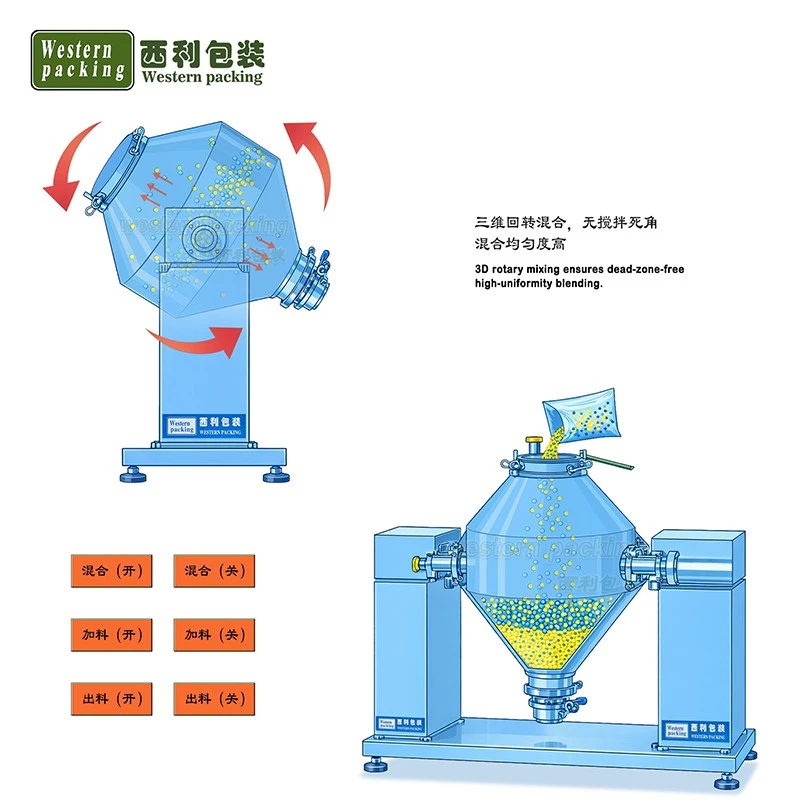
First off, let’s get on the same page about what we’re talking about here. A Double Cone Blender Mixer is that rotated two-cone-shaped tank that tumbles powdered ingredients (or sometimes small granules) evenly. It’s a staple in everything from protein powder blends to over-the-counter meds, which is why our Food Double Cone Mixer line is so popular for food and beverage clients. The noise level isn’t a one-size-fits-all number, though—there are a bunch of factors that change how loud it gets. I’ve had customers call up expecting a simple decibel (dB) number, and when I explain it depends on their setup, they get it. Let’s walk through those variables.
The biggest one? What’s actually inside the mixer when it runs. If you’re mixing fine, low-density powder (like flour or cocoa), that’s a pretty tame mix. But if you’re throwing in denser stuff—like granulated sugar, or even small grain particles for feed blends, or if you’ve got a mix that’s got some clumpy bits that break apart mid-rotation—That’s where noise spikes. I worked with a pet food client last year who first tried a cheap, off-brand Cone Blender Mixer for mixing grain and protein powders. They were getting 85 dB during operation, which is almost as loud as a lawnmower. Their operators were complaining about ear fatigue, and their site’s noise limit was 80 dB for 8-hour shifts, so they switched to our Cone Blender Mixing Powder and Grain model. The difference was huge—we added rubber lining to the inside of the cones and adjusted the rotation speed just a little, bringing noise down to 78 dB, well under their limit. That’s a case where the load material makes a massive difference.
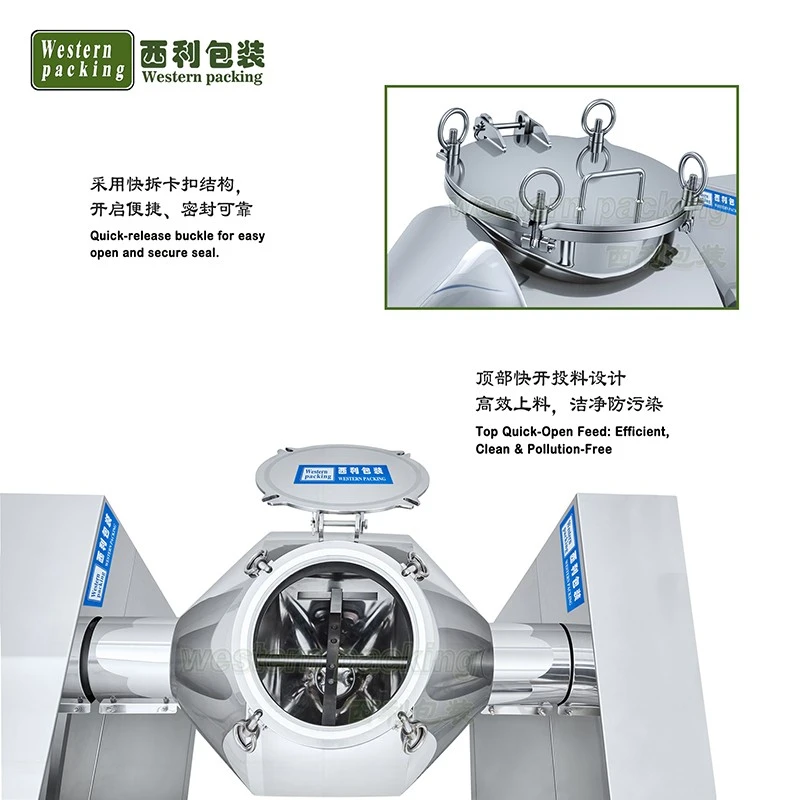
Next up is the machine itself. Not all Double Cone Blender Mixers are built the same. The quality of the parts matters a ton—like the bearings, the drive system, and how well the cones are balanced. Cheap models with flimsy bearings will rattle and squeak way more than ones with precision-machined components. We’ve seen guys cut corners on the drive motor, and that’s another noise culprit. Our Mixing Double Cone Blender line uses sealed, heavy-duty bearings and a variable-speed drive, which cuts down on unnecessary vibration and the noise that comes with it. I’ve tested these on our shop floor: when empty, they clock in at around 65 dB, which is about as loud as a normal conversation. When loaded with fine powder, it’s 70-75 dB—super manageable. If you go with a lower-quality mixer, empty can still be 70 dB, and loaded can hit 85 or higher, no doubt about it.
Rotation speed is another underrated factor. Double cone blenders work by rotating the tank so the material flows up the sides and falls back down, mixing evenly. If you spin it too fast, the material slams into the walls of the cones instead of flowing smoothly, which makes noise. Too slow, and it doesn’t mix right. The sweet spot? Usually 10-20 RPM, depending on the material. I had a coffee roaster client a while back who was running their mixer at 25 RPM, trying to get their coffee grounds and creamer mixed faster. It was so loud their operators were wearing ear plugs on top of the standard hearing protection. We adjusted their speed to 15 RPM, and the noise dropped by 10 dB—still fast enough for their batch size, no change in mix quality. That’s an easy fix most people don’t think about before pulling the trigger on a machine.
Wait, what about extra features? Some companies add spray nozzles for liquid ingredients, or a vacuum system for handling fine powders that would otherwise get dusty. If you’re adding a liquid spray, that can add a little noise—maybe 2-3 dB, which is barely noticeable. The vacuum system, though? If it’s a high-powered model, that can add 5-8 dB. Most of our customers opt for low-noise vacuum options when they need them, so that extra noise is minimal. I always tell new customers to mention if they’re adding any of these extra features upfront, so we can tune the mixer to keep noise in check.
Let’s talk about real-world numbers, because that’s what you actually care about. I’ve tracked dozens of tests on our machines in the last few years, across different materials and setups:
- Empty Double Cone Blender Mixer: 62-68 dB (like a quiet office or background music at a low volume)
- Loaded with fine, low-density powder (flour, protein powder): 70-76 dB (similar to a dishwasher running)
- Loaded with dense granules or grain: 75-82 dB (about as loud as a normal conversation raised a little, or a laundry machine)
- If you’re running a cheap, unbalanced mixer with heavy material: 85+ dB (as loud as a lawnmower or a motorcycle)
Now, what does that mean for your team and regulations? OSHA says the allowed exposure limit for 8 hours is 85 dB, but most sites have stricter internal limits—like 80 dB—so operators don’t have to wear constant ear protection. I’ve had pharma clients (super strict on safety) who require noise under 75 dB to meet their own internal protocols. Our Double Cone Blender Mixer models with the optimized bearing and variable speed drive hit that mark every time, even with dense blends.
A lot of people assume that noise is just a normal part of using a cone blender, but that’s not true. A lot of the noise you hear on off-brand models is avoidable: bad balancing, cheap parts, incorrect speed. I had a spice company come to us last year after two months of using a random cone blender they found online. They were getting 88 dB when mixing their spice blends, and their site was threatening to shut them down if they didn’t fix it. We swapped their old mixer for ours, adjusted the speed, and lined the cone with thin food-grade rubber to dampen the material impact. Now they’re at 72 dB, their operators are way happier, and they haven’t had any compliance issues. That’s the kind of problem solving we do every day, not just selling a machine and moving on.
Another thing: maintenance matters for keeping noise levels low long-term. If you don’t lubricate the bearings, or if the belt on the drive system gets worn, that will add noise over time. We include a quick maintenance guide with every mixer we sell, and our service team sends a quick check-in email 3 months after installation to make sure everything’s running smooth. I’ve seen customers skip maintenance, and six months later they’re calling us because their mixer got way louder. Simple stuff like tightening the belts or adding the right lubricant brings it right back down.
Wait, should you be worried about noise affecting mix quality? Let’s be real—no. Noise is almost entirely from how the material interacts with the tank or the machine’s parts, not from the mixing itself. If your mixer is properly balanced and running at the right speed, the noise won’t change how well your powder or grain gets mixed. The only time noise correlates to bad mix quality is if it’s way too fast or too slow, which we already talked about. That’s a common myth, though—people think a loud mixer is a good mixer, and that’s just not true.
I get it, noise level isn’t the first thing you think about when buying a mixer. You care about how well it mixes, how easy it is to clean, how fast you can get batches done. But noise is a big part of keeping your team safe and compliant, and it’s something you don’t want to deal with after you’ve already installed a machine. If you’re in the market for a mixer and want to chat through how to keep noise levels low for your specific materials, or just have questions about how our models stack up, I’m here to help. No pressure, just honest answers.
Don’t settle for a mixer that will leave your operators yelling to hear each other or get you a fine for non-compliance. Our team has been helping all kinds of manufacturers pick the right Double Cone Blender Mixer for their needs, with noise levels that fit their site’s rules. Reach out to us to talk through your exact setup, material, and site requirements, and we’ll help you find a solution that works for you.
References:
- Occupational Safety and Health Administration (OSHA). (2023). Noise Exposure Limits. Retrieved from osha.gov
- Powder/Bulk Solids. (2022). Noise Levels in Industrial Mixing Equipment. Retrieved from powderbulksolids.com
- American Conference of Governmental Industrial Hygienists (ACGIH). (2021). Threshold Limit Values for Physical Agents. Retrieved from acgih.org
- Food and Drug Administration (FDA). (2020). Good Manufacturing Practices for Food, 21 CFR Part 110. Retrieved from fda.gov