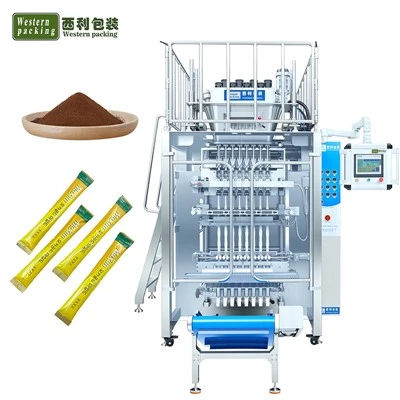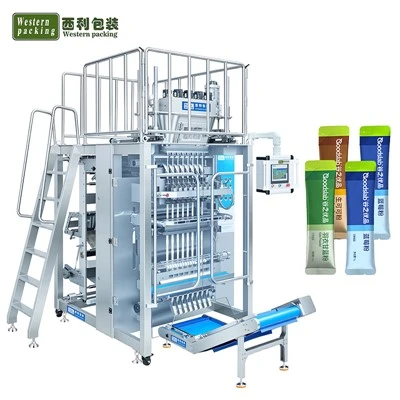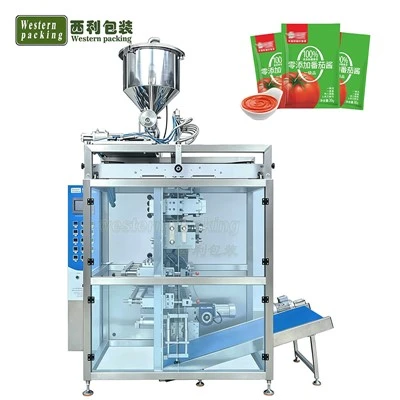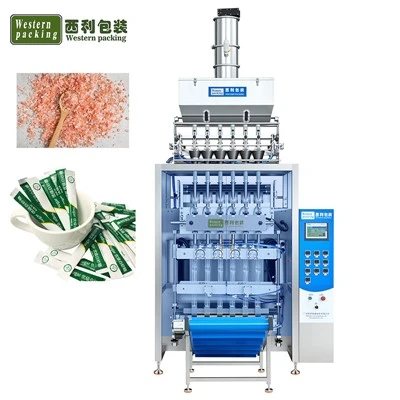


Sachets work because they turn a bulk product into a small, sealed dose. In food plants, that might be a 15 g honey sachet, a 5–10 g coffee stick, or a 20 g seasoning pack. In pharma, it may be a 3 g granule dose or a 10 mL oral liquid. The format looks simple; the engineering behind it is not. The real question is not whether a Sachet Packing Machine can run liquid, powder, or granules-many can-but whether the dosing, film, and sealing setup actually matches the product.


Where sachets fit in food production
The biggest gains in food packaging are not just speed. They are less manual handling, tighter fill control, and fewer leakers. Sauces and honey need drip-free filling and strong seals. Coffee and milk powder need low-humidity handling and good barrier film. Sugar and salt are relatively easy, but fine cocoa or spice blends can bridge in the hopper and cause inconsistent fills.
A machine that claims to run all three material types is useful only if changeover is realistic. In practice, single-lane lines are often used for trial batches, specialty flavors, and smaller retail orders. Multi-lane lines make more sense when the SKU is stable and the order volume is long enough to justify the extra tooling and setup time. For a food manufacturer, the benefit is not "one machine does everything." It is being able to move between product families without rebuilding the whole line.
What changes in pharmaceutical production
In pharma, the priorities shift. A Sachet Packing Machine for pharmaceutical use is usually specified around dose accuracy, cleanability, and documentation, not just output. Granules and powders need validated metering. Oral liquids need accurate pumps and leak-free sealing. GMP-oriented design, stainless-steel contact parts, easy-clean surfaces, batch coding, and expiry printing are basic expectations rather than selling points.
High-barrier films and reliable seals protect hygroscopic or oxidation-sensitive products. IQ/OQ/PQ support also matters because the machine is part of a qualified process, not a stand-alone piece of equipment. A single-lane unit can be practical for clinical samples, small-volume products, and high-mix production. Multi-lane systems are better suited to long commercial runs where output per cycle and unit cost carry more weight.
Single-lane or multi-lane?
The choice is less about which is better and more about order pattern. Single-lane equipment usually means lower investment, a smaller footprint, and faster changeover. It suits new products, trial batches, and high-mix/low-volume work. Multi-lane equipment gives higher output per cycle and better economies of scale on long runs, but it can also add setup complexity. More lanes do not automatically solve changeover problems.
A practical compromise is to start with a single-lane line and design the room and utilities for future multi-lane expansion. That approach keeps the initial investment manageable while leaving room for volume growth.
What to check before buying
Start with product behavior, not bag size. For liquids, check viscosity, foaming, and drip control. For powders, check flowability, dust, and cohesion. For granules, check size and fragility. Then match the dosing method: pumps or flow meters for liquids, auger or cup fillers for powders, volumetric or weighing systems for granules. Film compatibility, seal jaw design, coding, inspection, and rejection systems should be checked against the actual product, not just brochure samples.
A cup filler that works for free-flowing sugar may fail on fine herbal powder. A pump that handles water-like liquid may struggle with honey. Dust control and cleaning access often matter more than the headline speed figure. Ask for a test run with your own material before finalizing the configuration.
Bottom line
Sachets give food and pharma brands portion control, product protection, and convenience. The equipment only delivers those benefits when dosing and sealing are matched to the product and the production pattern. That is why the Sachet Packing Machine should be chosen around product families, batch sizes, and compliance needs-not around a single output number.