

As industries such as food, pharmaceuticals, chemicals, and household products place greater emphasis on production automation and product consistency, the technical performance of mixing machines has become increasingly important. Materials can differ considerably in particle size, density, flowability, and viscosity. As a result, mixing equipment should be designed and configured according to the actual production process rather than relying on a one-size-fits-all approach. Proper equipment selection and technical design help ensure reliable and consistent mixing performance.
A mixing machine should first have a well-engineered mechanical structure. The mixing chamber, agitation system, transmission components, and discharge mechanism need to work together effectively. The mixing elements should be selected according to the characteristics of the material so that the product can circulate, turn over, and disperse effectively during operation. This helps minimize dead zones and improve overall mixing performance.
Mixing uniformity is one of the most important technical requirements. During operation, different components should be distributed as evenly as possible throughout the mixing chamber, with minimal variation in local composition. For powders, granules, and other materials, appropriate mixing time, agitation speed, and operating methods should be selected based on the material properties. This helps avoid both insufficient blending and unnecessary over-processing.
Stable operation is another essential requirement. Key components such as motors, gear reducers, bearings, shafts, and mixing elements should be properly matched and capable of maintaining reliable performance during continuous operation. The machine should minimize excessive vibration and noise, while its mechanical structure should help reduce the risk of loosening and premature wear over extended use.
Mixing machines should also provide effective process control. A control system can be used to manage functions such as startup, shutdown, mixing speed, and processing time, making the production process easier to operate and monitor. In automated production lines, the mixing machine can also be integrated with conveying, dosing, and packaging equipment to improve coordination across the entire workflow.

Safety is another important part of mixing machine design. Appropriate protective structures and safety control devices should be provided so that the machine can be stopped properly during maintenance, cleaning, or abnormal operating conditions. For applications involving frequent cleaning or product changes, the equipment should also be designed for convenient access, cleaning, and maintenance.
Material selection and manufacturing precision are also important during equipment production. Components that come into direct contact with the product should be made from materials suitable for the intended application, with surface finishes and manufacturing tolerances appropriate for the process. Proper design can help reduce material residue and simplify cleaning operations.
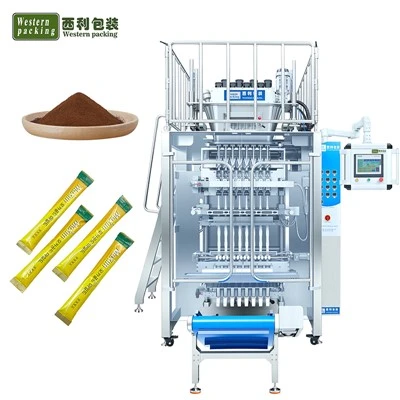
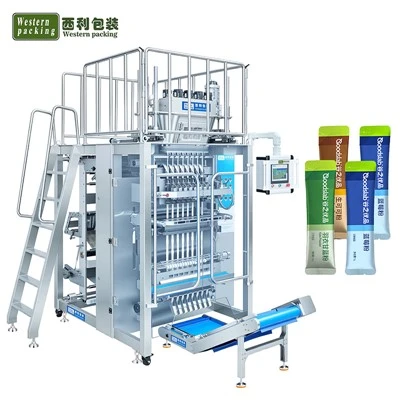
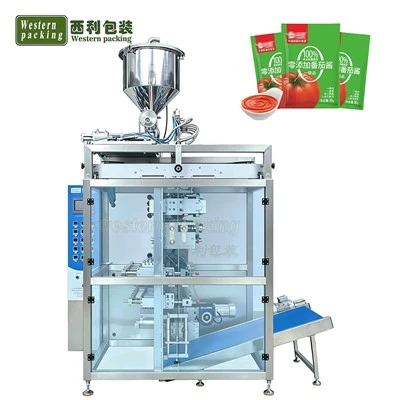
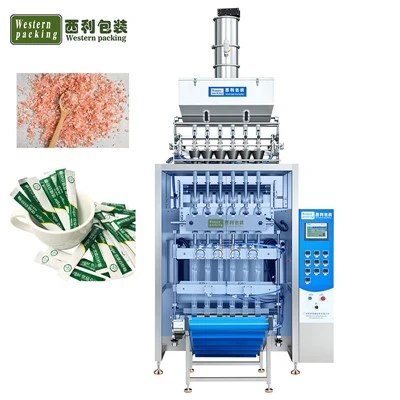
Guangzhou Western Packing Co., Limited specializes in packaging machinery and related packaging materials, providing equipment solutions for different material handling and packaging applications. These solutions can support manufacturers in material processing and subsequent automated packaging operations.
Overall, the technical requirements for mixing machines cover mechanical design, blending uniformity, operating stability, process control, safety protection, and ease of cleaning and maintenance. As production processes continue to advance, mixing equipment is expected to develop toward greater efficiency, reliability, energy efficiency, and automation.