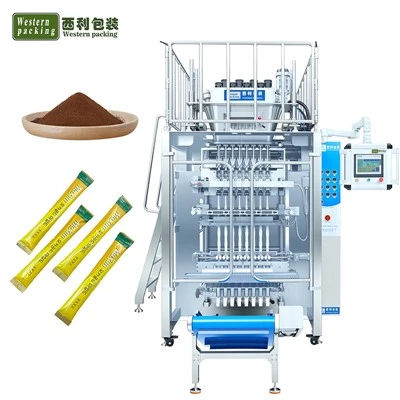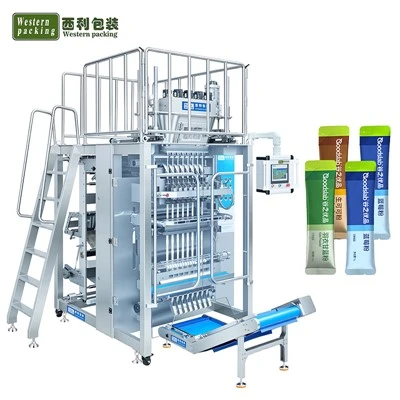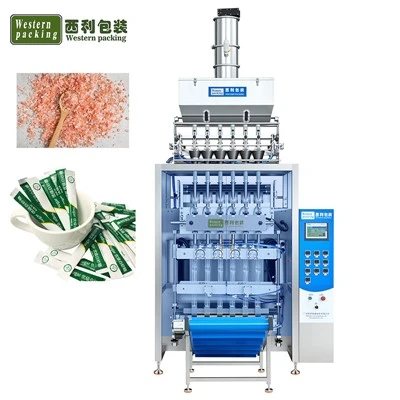


If you’ve ever walked down a grocery aisle and grabbed a box of tea sticks, coffee sachets, or protein powder sticks, you’ve probably never stopped to wonder how those tiny individual stick bags end up perfectly stacked inside a cardboard box. That’s all thanks to a key part of every modern stick bag cartoning machine: the carton stacking function. As a supplier of these machines, I get asked about this all the time—people know these machines pack stick bags into boxes, but they don’t always get how that stacking part works, why it matters, or how it ties into the rest of the equipment. Let’s break this down in plain terms, no jargon overload, just what you need to know.
First, let’s set the scene. If you’re a brand making stick bags—whether that’s instant coffee, sugar, honey, protein shakes, even small snack sticks like jerky or fruit puree—you’re not just filling and sealing those little bags. You need them to get to shelves or customers in a way that’s efficient, consistent, and won’t break during shipping. That’s where cartoning comes in, and the stacking function is the backbone of that process. The last thing you want is a pile of crumpled stick bags inside a box, which would ruin the look and make customers think the product is low quality.
Before we dive deep into stacking, let’s clarify what a stick bag cartoning machine actually does for context. Unlike a standard pouch cartoning machine that handles larger, flatter pouches, or a sachet cartoning machine for even smaller, flatter single-serve sachets, stick bags are long, narrow, and often have a slight shape to them—they’re not flat like a regular pouch. That unique shape is why their stacking needs to be specific, not just the same as any other carton packaging. If you try to use a standard automatic stick bag cartoning machine without a dedicated stacking system, you’ll end up with a jumble, not the neat stacks that brands want.
So what exactly is the carton stacking function? Simply put, it’s the set of processes within the machine that takes individual stick bags as they come off the sealing line, aligns them precisely, counts the exact number needed for one box, and loads them into the cardboard carton in a consistent, stable stack. But it’s way more intricate than that. Modern systems don’t just drop bags into a box—they handle the movement with precision, adjust for any tiny variations in bag size or shape, and make sure each stack is uniform every single time, even when the machine is running at high speed.
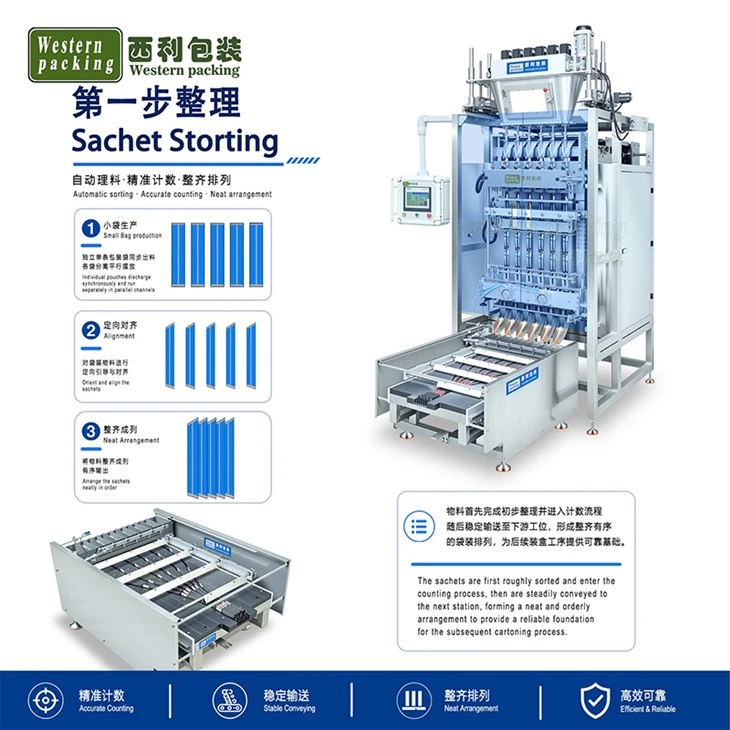
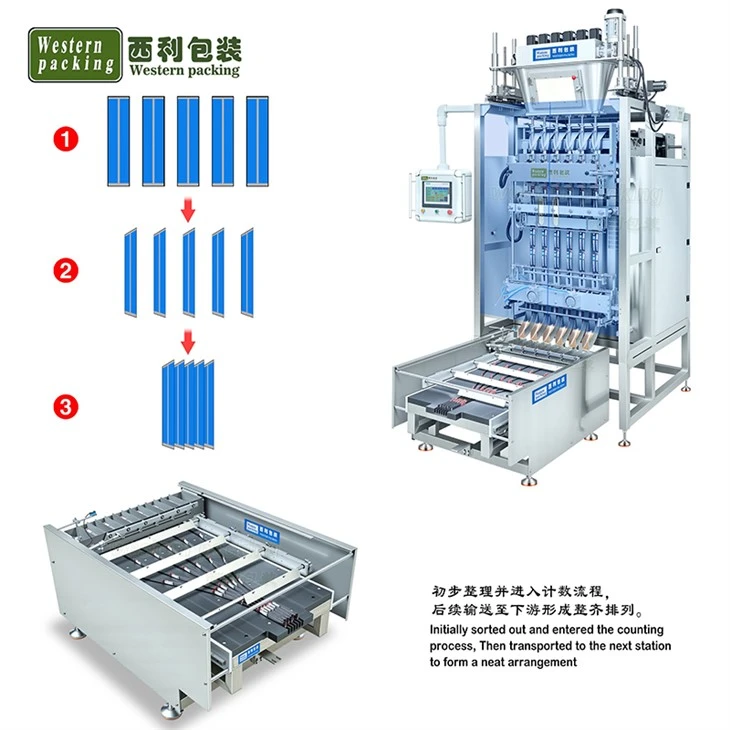
Let’s walk through how this works step by step, because seeing it (or explaining it) makes it click. First, after the stick bags are filled, sealed, and cut from the web, they move down a conveyor to the cartoning machine. The first part of the stacking function here is the orienting section. Stick bags can come down the conveyor in all directions—upside down, tilted, even overlapping. The stacking system uses small guides, sensors, and sometimes gentle air jets to flip or nudge each bag into the right orientation: usually longways, with the sealed end facing the same direction. If the orientation is off here, the entire stack will be messed up, so this part is non-negotiable.
Next comes the counting and grouping step. Let’s say a box of your favorite tea sticks has 20 bags inside. The stacking function needs to grab exactly 20 bags, no more, no less, every single cycle. That’s where photo eyes or weight sensors come in—they track each bag as it passes, and when the count hits the right number, the system holds that group in a holding pocket or on a small, moving platform. Wait times here are short, but critical—if the system counts a bag twice, you’ll have 21, which is a problem for packaging specs.
Then comes the aligning and compressing part. Once you have the right number of bags grouped together, the stacking function adjusts them to be perfectly straight, no gaps between them. Some machines use small side guides that gently push the bags together, while others use a light compression pad that presses lightly on the top of the group to make it a tight, uniform stack. Why is compression needed? If the stack is loose, it might shift when the box is being closed or shipped, leading to damaged bags. For stick bags, which are narrow, a loose stack can also mean the box isn’t fully sealed, which could cause moisture to get in or the bags to fall out.
Now, you might be thinking: why not just load the bags one by one? Because that would be way slower, and not consistent. The stacking function is designed to work in sync with the rest of the cartoning process. The machine is simultaneously picking up a flat cardboard carton from a magazine, opening it, gluing the bottom flaps closed, and then the stacked group of stick bags is pushed into the open box in one smooth motion. This sync is why high speed cartoning machines can run at 100+ sticks per minute—without a dedicated stacking function, you couldn’t keep up that pace without making mistakes.
I’ve had clients tell me they used a generic cartoning machine before, and the stacking part was such a mess they had to hire 3 extra people to fix the boxes by hand. That’s the mistake a lot of brands make—they buy a machine that works for pouches or sachets, and try to adapt it for stick bags, but stick bags have a unique shape that generic stacking systems don’t handle well. That’s why a purpose-built stick bag cartoning machine with a specialized stacking function isn’t just a nice-to-have—it’s a must for consistency.
Let’s talk about common pain points the stacking function solves. First, static. Stick bags made of plastic or foil can build up static as they move down the conveyor, which makes them stick together instead of moving individually. A good stacking function will have anti-static brushes or small ionizers to prevent that, so each bag is counted and grouped correctly. Second, bag size variations. Sometimes, due to minor differences in sealing, a stick bag might be a millimeter longer or shorter than the next. The stacking system’s sensors can adjust the holding pockets or guides to account for that, so the final stack is still uniform, not lopsided. Third, speed. If you’re running a small operation, maybe 20 sticks a minute, a basic stacking function works, but if you’re a mid-sized brand growing fast, you need a stacking function that can keep up with a high speed cartoning machine without sacrificing accuracy.
Another thing people don’t always realize: the stacking function also ties into the end of the cartoning process. After the bags are stacked and loaded into the box, the machine closes the top flaps, adds any branding inserts (like a product leaflet), and seals the box. If the stack is uneven, the top flaps won’t close properly, which can lead to rejected boxes. I’ve seen brands lose thousands of dollars because they skipped investing in a good stacking function, leading to 10% of their boxes being rejected at the end line.
Now, let’s get into what makes a great stacking function for stick bags. It’s not just about counting and loading—it’s about adaptability. A lot of clients make different products: one week tea sticks, the next honey sticks, maybe even small snack sticks later. A flexible stacking function lets you adjust settings (like the number of bags per stack, the size of the holding pocket, the compression level) in minutes, not hours. That means you don’t have to buy a whole new machine when you launch a new product line, which saves a ton of money.
I recently worked with a small coffee brand that was using a manual process before—they had 5 employees manually counting and stacking coffee stick bags into boxes, and they were only running 500 boxes a day. Once they upgraded to an automatic stick bag cartoning machine with a advanced stacking function, they jumped to 5,000 boxes a day, and cut their labor costs by 80%. They told me the biggest difference was no more messed up stacks at the end—they used to have to fix 500 boxes a day, now they have zero rejects from stacking issues. That’s the impact a good stacking function has.
Wait, let’s circle back to the different machine types to make sure we’re clear. A pouch cartoning machine works for flat, wider pouches, so their stacking systems are built to lay pouches flat in the box. A sachet cartoning machine handles even smaller, thinner sachets, so their stacking is more about nesting small items. But stick bags are long and narrow, so their stacking function has to orient them vertically or horizontally (depending on the box size) in a way that’s stable. That’s why you can’t use a generic machine for stick bags—you need one with a stacking system tailored to that unique shape.
Let’s address a common question: do all stick bag cartoning machines have a good stacking function? No, that’s a big mistake. Some budget machines cut corners on the stacking part, using basic sensors that can’t handle static or size variations. As a supplier, I always tell clients to prioritize the stacking function over other parts, because if that fails, the whole line stops. The best stacking functions use a combination of mechanical guides, smart sensors, and programmable logic controls (PLCs) that let you adjust settings easily. No more replacing parts every few months because the stacking system is wearing out from handling stick bags incorrectly.
Another point: product safety. Stick bags for food or supplements need to stay sealed and protected during packaging. A good stacking function handles the bags gently, so there’s no risk of punctures or tears during loading. A bad stacking function could scrape the bags, leading to leaks, which ruins the product and can even be a safety issue. For brands making consumable products, that’s non-negotiable.
So, when you’re in the market for a machine, what should you look for in the carton stacking function? First, confirm it’s specifically designed for stick bags—not just adapted from pouch or sachet machines. Check if it has adjustable settings for bag count, size, and orientation. Ask about anti-static features, because stick bags build up static easily. And if you’re planning to scale, make sure it integrates with a high speed cartoning machine, so you can increase production as your brand grows.
At the end of the day, the carton stacking function is the unsung hero of the stick bag cartoning process. It’s not the flashy part (most people focus on the filling and sealing), but it’s what keeps your products looking good, consistent, and ready to get to customers. If you’re a brand looking to streamline your packaging process, reduce labor costs, and eliminate rejects, investing in a stick bag cartoning machine with a reliable, purpose-built stacking function is the move. Whether you’re just starting out or ready to scale up, getting this right from the start will save you a ton of headaches (and money) down the line.
If you’re ready to learn more about how the right stacking function can work for your stick bag production, feel free to reach out to discuss your specific needs, machine options, and how to pick the best fit for your operation.
References
- Cartoning Machine Technical Specifications, Packaging Machinery Association, 2023
- Efficiency Metrics for Stick Bag Packaging Lines, Journal of Packaging Technology and Science, 2022
- Key Components of Automatic Cartoning Systems, Industrial Packaging Solutions Guide, 2024
- Common Failure Points in Stick Bag Cartoning Processes, Packaging Digest, 2023