

Hey there! As a supplier of mixing equipment, I've gotten a bunch of questions about adapting a Mixing Double Cone Blender to work in a vacuum. It's a super interesting topic, so I thought I'd share some insights with you.
First off, let's talk about why you might want to use a Double Cone Blender Mixer in a vacuum. There are several reasons. For one, it helps to remove air and moisture from the mixing process. In industries like pharmaceuticals and food, this is crucial. Air and moisture can oxidize the ingredients, leading to a shorter shelf - life and a decrease in product quality. By working in a vacuum, you can prevent these issues and ensure a more stable and high - quality end product.
Now, let's get into the adaptations needed for a double cone blender to work in a vacuum.
Sealing System
The most important adaptation is the sealing system. A regular double cone blender isn't designed to hold a vacuum. You need to make sure that all the joints, ports, and openings are properly sealed. This usually involves using high - quality gaskets made from materials that can withstand vacuum conditions. For example, Viton or silicone gaskets are commonly used because they have good resistance to vacuum and can create a tight seal.
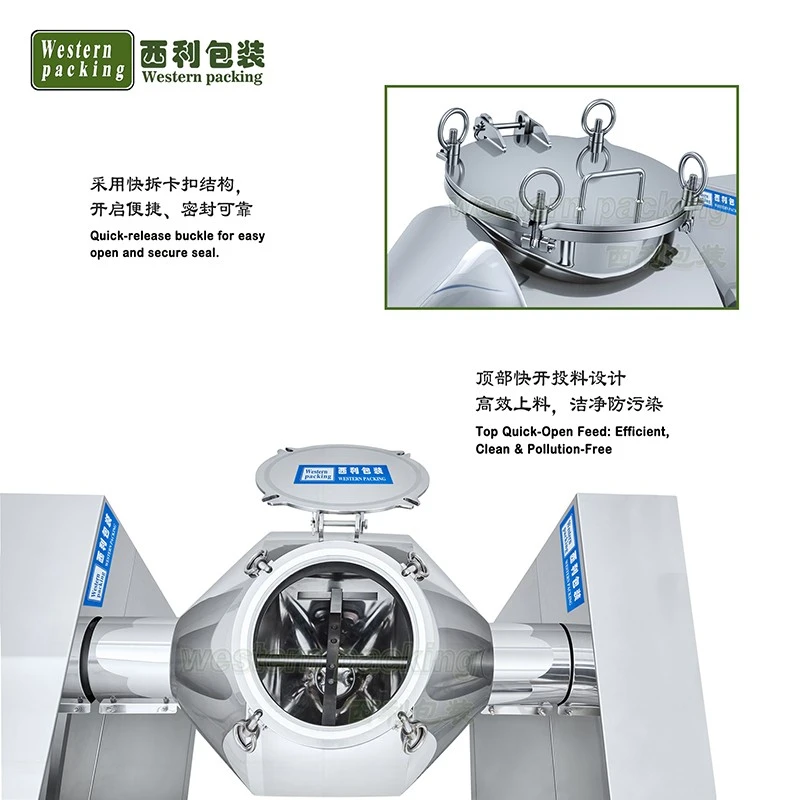
Also, the blender's doors and hatches need to be designed in a way that they can be locked tightly to prevent air leakage. A well - sealed blender will maintain the vacuum level, which is essential for the entire mixing process. If there's air leakage, it can affect the quality of the mixture and also increase the risk of contamination.
Vacuum Pump
To create and maintain a vacuum in the blender, you'll need a reliable vacuum pump. The choice of the vacuum pump depends on the size of the blender and the level of vacuum you need to achieve. There are different types of vacuum pumps available, such as rotary vane pumps, diaphragm pumps, and scroll pumps.
Rotary vane pumps are a popular choice because they can provide a relatively high vacuum level. They work by using rotating vanes to create cavities that draw in and compress the air. Diaphragm pumps, on the other hand, are more suitable for applications where a lower vacuum level is required. They are also maintenance - friendly and can handle corrosive gases in some cases.
The vacuum pump needs to be properly connected to the blender. There should be a dedicated port on the blender for the vacuum pump connection, and it should be sealed to prevent any air from entering the system through the connection point.
Material of Construction
The material of the blender also needs to be considered when working in a vacuum. The blender should be made of materials that can withstand the pressure difference between the inside (vacuum) and the outside (atmospheric pressure). Stainless steel is a common choice because it's strong, corrosion - resistant, and can handle the stress caused by the vacuum.
In addition, the internal surface of the blender should be smooth to prevent any material from sticking. This is especially important in a vacuum environment because any trapped material can release air and moisture, affecting the vacuum level.
Monitoring and Control Systems
You'll need a good monitoring and control system to ensure that the vacuum process is going smoothly. This includes pressure sensors to measure the vacuum level inside the blender. These sensors can be connected to a control panel, which allows you to monitor the pressure in real - time.
If the vacuum level drops below a certain point, the control system can trigger an alarm or automatically activate the vacuum pump to maintain the desired level. Temperature sensors are also important, especially if the mixing process involves heat. Changes in temperature can affect the vacuum level and the properties of the mixture.
Agitation and Mixing Mechanism
The agitation and mixing mechanism in a Cone Blender Mixer needs to be optimized for vacuum conditions. In a vacuum, the flow behavior of the materials can be different compared to normal atmospheric conditions. The mixer should be able to ensure a thorough and uniform mixing of the ingredients.
Some blenders might require modifications to the blades or paddles to improve the mixing efficiency in a vacuum. For example, the shape and size of the blades can be adjusted to create different flow patterns and ensure that all the materials are well - mixed.
Loading and Unloading Systems
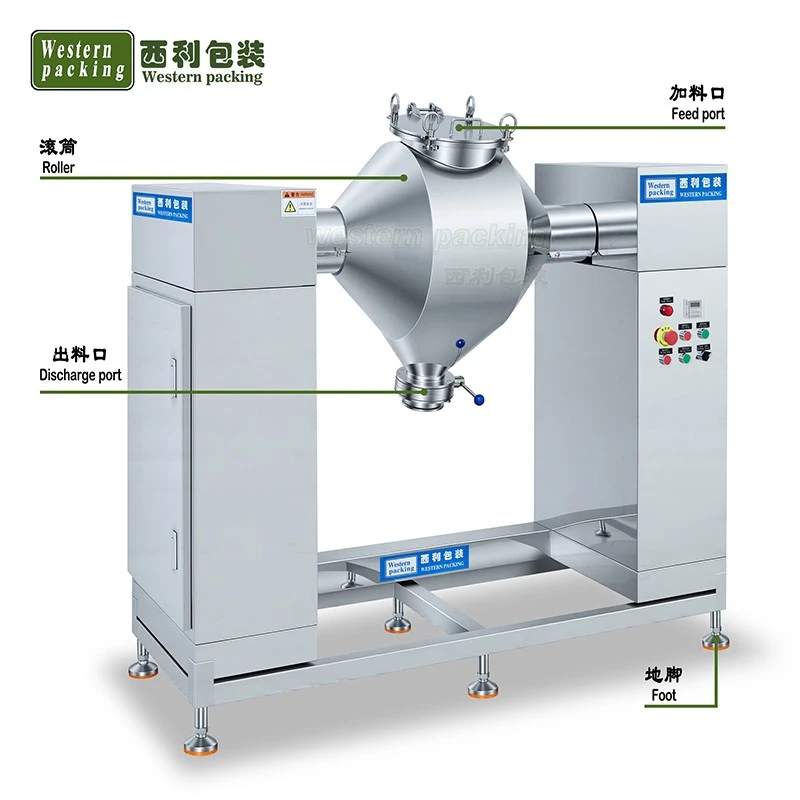
When working in a vacuum, the loading and unloading of materials need to be carefully designed. The traditional way of loading and unloading might not work well because it can introduce air into the system. Special loading and unloading ports with proper valves and seals are required.
For loading, a vacuum - tight feeder can be used to introduce the materials into the blender without breaking the vacuum. Unloading can be done through a valve that can be opened while maintaining the vacuum as much as possible. This helps to prevent air from entering the blender and ensures a continuous and efficient mixing process.
Safety Considerations
Working with a vacuum - operated Cone Blender Mixing Powder and Grain also requires some safety adaptations. The blender should be equipped with safety valves that can release the vacuum in case of an emergency, such as an over - pressure situation.
Pressure relief devices can prevent the blender from being damaged due to excessive pressure. Also, the operator should be provided with proper training on how to handle the vacuum - operated blender safely. This includes knowledge about the vacuum system, the control panel, and how to respond to different situations.
Applications in Different Industries
Let's take a look at how these adapted double cone blenders are used in different industries.
In the pharmaceutical industry, the high - precision mixing in a vacuum environment is essential for producing drugs with consistent quality. The Food Double Cone Mixer is useful in food processing, especially for products like spices, powders, and dry ingredients. It helps to preserve the flavor and nutritional value of the food by reducing oxidation and moisture.
In the chemical industry, a vacuum - adapted double cone blender can be used for mixing reactive chemicals. Removing air from the mixing process can prevent unwanted chemical reactions and ensure the safety and quality of the final product.
Conclusion
Adapting a Mixing Double Cone Blender to work in a vacuum requires several key modifications in terms of sealing, pumping, materials, monitoring, and safety. By making these adaptations, the blender can be used effectively in various industries where a vacuum environment is necessary.
If you're interested in learning more about our Mixing Double Cone Blender and how it can be adapted for your specific vacuum - mixing needs, feel free to reach out and start a conversation. I'd be more than happy to discuss your requirements and help you find the best solution for your production process.
References
- Chemical Engineering Handbook. Several editions provide in - depth information on industrial mixing equipment and vacuum technology.
- Pharmaceutical Manufacturing Technology textbooks. These resources offer insights into the requirements for high - quality mixing in the pharmaceutical industry under vacuum conditions.
- Food Processing Technology journals. They contain research and case studies on the use of vacuum - operated mixers in food production.