

If you’ve ever walked through a food processing plant, a pharmaceutical manufacturing facility, or even a small-scale cosmetics lab, chances are you’ve seen a granule packaging machine in action. These workhorses are designed to measure, fill, seal, and label granular products—think salt, sugar, silica gel desiccants, or vitamin blends—with precision. But for many of my customers, especially those scaling up production or streamlining existing workflows, one question keeps coming up: Can a granule packaging machine actually connect to other production line equipment? The short answer is yes, and in fact, integrating packaging machinery with upstream and downstream equipment is one of the most effective ways to boost efficiency, reduce errors, and keep production lines running smoothly. As a granule packaging machine supplier, I’ve spent years helping businesses navigate these integrations, and today I want to break down how it works, why it matters, and the practical examples that make these connections feel less like a technical hurdle and more like a game-changer.
Let’s start with why connecting a granule packaging machine to other equipment is such a big deal. Most production lines don’t operate in silos. Before granules reach the packaging stage, they’re typically processed: raw materials are mixed, sorted, melted (in the case of some granule formulations), or transported from bulk storage silos. After packaging, you might have cartoners that fold pouches into boxes, palletizers that stack boxes onto skids, or labeling systems that add batch codes and expiration dates. If each of these machines works independently, you end up with bottlenecks: one line stops, and the whole process backs up. Workers have to manually move products between machines, which not only takes time but also increases the risk of contamination or product damage. Integrating them means they communicate with each other, sharing data and coordinating operations in real time.
The good news is that modern granule packaging machines, including our range of solutions, are built with connectivity in mind. The technology that makes this possible is often called industrial communication protocols—think Ethernet/IP, Modbus TCP/IP, or Profinet. These protocols allow machines to send and receive signals, adjust speeds, and trigger actions automatically. For example, if an upstream mixing tank finishes blending a batch of granulated coffee, it can send a signal to a granule packaging machine to start filling pouches as soon as the empty packaging film is ready. No more waiting for an operator to start the next step.
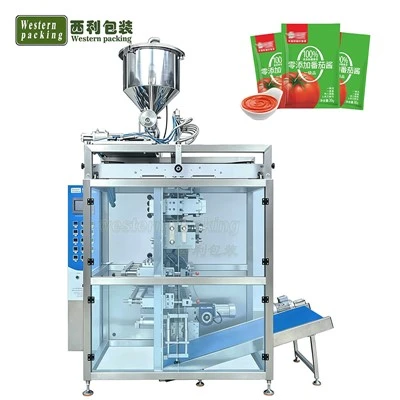
One of the most common integrations I help customers set up is between a granule packaging machine and bulk material handling equipment. Many businesses start with storing granules in large hoppers or silos, and manually moving that product to the packaging machine is labor-intensive and can lead to inconsistent fill levels. When you connect a granule packaging machine to an automatic feeding system, the feeder can adjust the flow of granules based on the packaging machine’s real-time needs. If the packaging machine is running at a higher speed, the feeder increases the flow of granules; if the machine pauses for a film change or a seal check, the feeder slows down to avoid overfilling. This is particularly useful for products like silica gel sachets, which require precise, consistent fill weights to meet regulatory standards. If you’re packaging silica gel, for example, our Silica Gel Sachet Packing Machine can be paired with a vacuum conveying system that transports silica gel beads directly from bulk storage to the machine’s hopper, eliminating manual handling and reducing the risk of cross-contamination between batches.
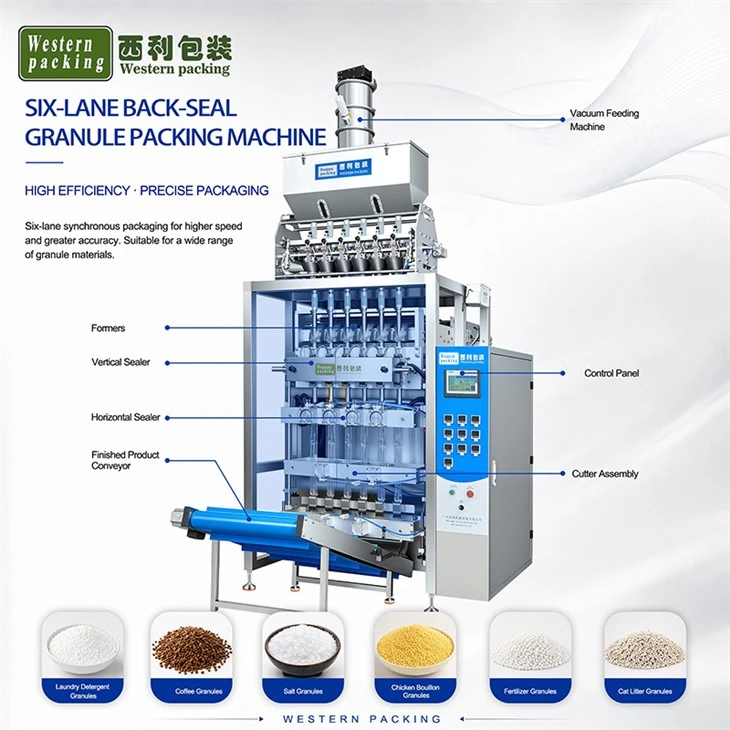
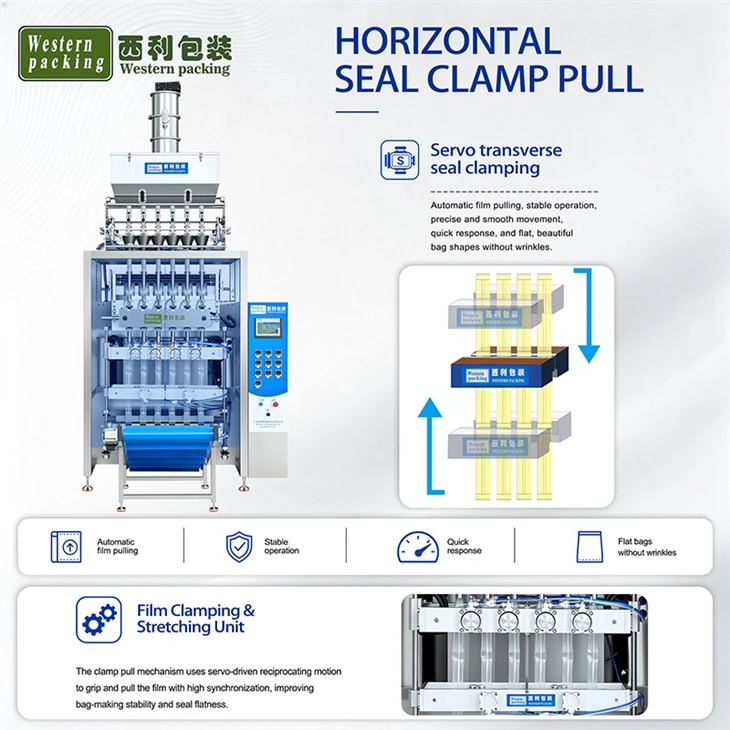
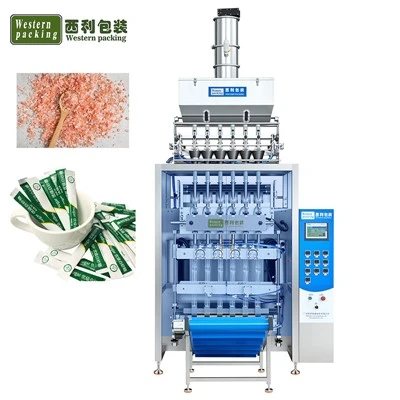
Another key integration is with product inspection and quality control equipment. After a granule is filled into a pouch, it’s important to check for issues like underfilled pouches, damaged seals, or foreign particles. Connecting the granule packaging machine to a checkweigher or metal detector means that faulty packages can be rejected automatically, without stopping the entire line. For a small business packaging salt sachets for coffee shops, this ensures that every sachet has the correct amount of salt, while a large pharmaceutical manufacturer using granule packaging for vitamin blends can meet strict FDA requirements for product safety. Our Automatic Granule Packing Machine is designed to work seamlessly with these inspection tools, using the same communication protocol to flag and remove non-compliant packages before they reach downstream stages.
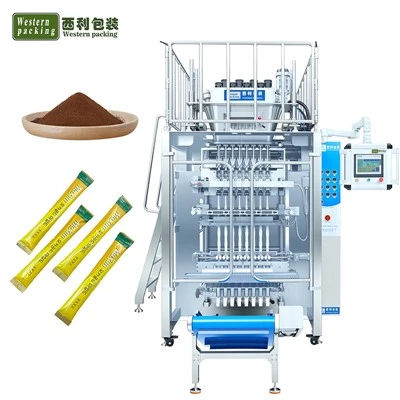
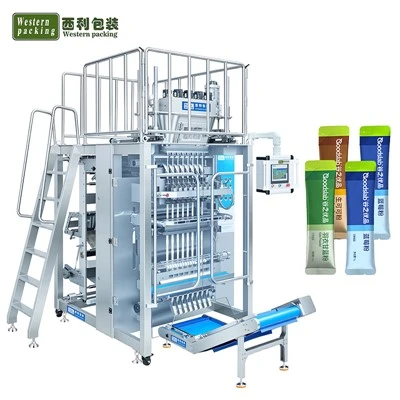
Downstream integrations are just as important. Once a pouch of granules is sealed, it often needs to be packed into cartons, loaded into cases, or palletized for shipping. Connecting a granule packaging machine to a cartoner, for example, means that sealed pouches are automatically fed into the cartoner, which folds and seals the carton without any manual intervention. For multi-lane products like sugar sachets used in hotels, a Multi Lane Sugar Sachet Packaging Machine can be linked to a case packing system that groups 10 or 20 sachets into a single case, cutting down on packing time significantly. Even for products that use stick sachets—like granulated energy drinks or protein powders—our Granule Stick Sachet Packaging Machine can connect to labeling equipment that adds individual barcodes to each stick, making it easy to track products from manufacturing to the store shelf.
Of course, every production line is different, so customization is key. A small craft bakery packaging granulated sugar for retail will have very different needs than a large chemical company packaging granulated fertilizer. As a supplier, I don’t just sell a granule packaging machine and walk away— I work with each customer to assess their specific workflow, identify bottlenecks, and design a connection that fits their line. For example, a customer who produces granulated spices might need their packaging machine connected to a dust extraction system to keep the workspace clean. Others might need to integrate their packaging machine with a warehouse management system (WMS) to track inventory levels in real time, so they never run out of raw materials or packaging supplies.
I’ve seen firsthand how these integrations transform businesses. Last year, a customer who made organic granola bars came to me because their manual packaging process was limiting their sales. They were filling granola clusters (which count as granules here) into pouches by hand, then having a separate team pack the pouches into boxes. They were losing about 20% of their pouches to mispacking and had to hire three extra workers to keep up with demand. We connected their Automatic Granule Packing Machine to a bulk granola feeding system, a checkweigher, and a case packer. Within three months, their production capacity doubled, labor costs were cut by 40%, and product waste dropped to less than 3%. That’s the power of connecting equipment—it’s not just about adding machines, it’s about creating a continuous, efficient flow that lets businesses grow.
I should also mention that connectivity doesn’t mean you have to replace all your existing equipment. Many businesses already have reliable production line equipment and just want to add a granule packaging machine that works with what they have. Our machines are built to be compatible with most standard industrial communication protocols, so you can integrate our granule packaging machine with your current mixers, fillers, or palletizers without a full line overhaul. This is especially helpful for small to medium-sized businesses that don’t have the budget to replace their entire line at once.
Of course, there are a few things to consider when connecting a granule packaging machine to other equipment. First, you need to make sure all machines are using the same communication protocol. If your old cartoner uses an older protocol that’s not compatible with your new granule packaging machine, there are adapters available, but it’s best to plan for this upfront. Second, you’ll need to have a clear understanding of your production line’s speed and capacity. If your upstream mixing machine can only produce 1,000 batches per hour, you don’t want a granule packaging machine that can handle 2,000 per hour—it will be underutilized. Finally, training your team is important. Even the best-connected machines won’t work well if your operators don’t know how to monitor or adjust the integrated line. As a supplier, we provide training and ongoing support to make sure our customers feel confident using their integrated systems.
If you’re thinking about upgrading your production line or adding a granule packaging machine, connecting it to other equipment is one of the smartest moves you can make. It reduces waste, saves time, cuts labor costs, and lets you scale your business without adding more manual work. Our range of granule packaging solutions is designed to integrate with all types of production lines, from small food processing operations to large pharmaceutical facilities. Whether you need a Silica Gel Sachet Packing Machine for desiccants, an Automatic Granule Packing Machine for versatile granule products, a Salt Sachet Packing Machine for food service, a Multi Lane Sugar Sachet Packaging Machine for bulk packaging, or a Granule Stick Sachet Packaging Machine for single-serve products, we can help you design an integrated line that works for your unique needs.
If you’re ready to explore how connecting your granule packaging machine to other production equipment can benefit your business, we’re here to help. Our team of experts will walk you through your options, answer any questions you have, and work with you to create a solution that fits your budget and your workflow.
References
- International Society of Automation. (2022). Industrial Communication Protocols for Manufacturing Integration. Retrieved from ISA Resources.
- Food and Drug Administration. (2021). Current Good Manufacturing Practices (CGMPs) for Packaged Granular Food Products. Retrieved from FDA.gov.
- Packaging Machinery Manufacturers Institute. (2023). Guide to Integrating Packaging Machinery into Production Lines. Retrieved from PMMI Publications.
- Industrial Maintenance and Plant Operation Magazine. (2022). Reducing Bottlenecks Through Equipment Connectivity in Granule Packaging. Retrieved from IMPO Magazine.