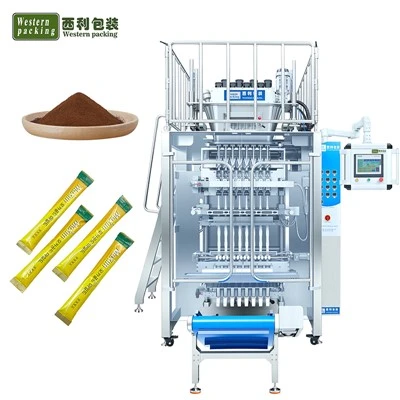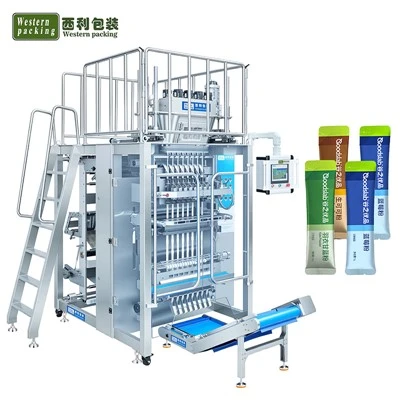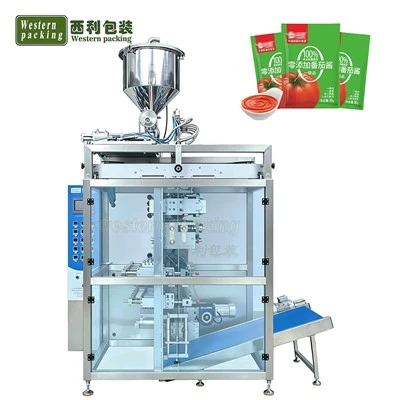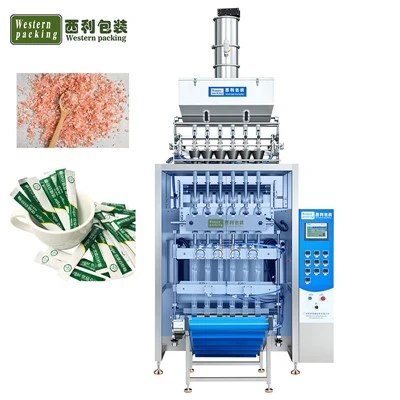


As tea packaging formats continue to diversify, products such as tea bags, single-serve sachets, broken tea leaves, and tea powder are creating higher demands for equipment stability, dosing accuracy, and production efficiency. A tea packaging machine incorporates multiple systems, including mechanical structures, control systems, dosing units, conveying mechanisms, and sealing assemblies. A well-developed manufacturing process provides an important foundation for reliable equipment performance and automated tea packaging.
Manufacturing typically begins with structural design and component fabrication. The overall machine configuration is determined according to the intended application and packaging specifications. Components such as the frame, hopper, forming unit, sealing mechanism, and drive assemblies are then manufactured to the required specifications. Critical components must meet appropriate dimensional and machining tolerances so that the different assemblies can work together smoothly after installation.
Once the mechanical components have been fabricated, the machine moves into the assembly stage. Technicians install the feeding, dosing, bag-forming, filling, sealing, and cutting systems according to the equipment design and packaging sequence. Drive components and connection points are then adjusted to ensure proper alignment. Careful assembly helps minimize mechanical variation during operation and provides a solid foundation for subsequent commissioning.
Installation of the control system is another important part of the manufacturing process. Depending on the machine configuration, components such as PLC controllers, sensors, stepper motors, and photoelectric detection devices are installed and connected to the relevant operating units. After electrical installation is completed, the control program and operating parameters are tested and adjusted so that packaging speed, bag length, dosing, and sealing can work together in a coordinated manner.

The completed machine must then undergo both no-load testing and product trials. No-load operation is mainly used to verify the performance of the drive, conveying, and control systems. Product testing focuses on tea feeding, dosing, filling, bag forming, and sealing performance. Based on the test results, relevant parameters can be adjusted to ensure that the equipment meets the requirements of the intended packaging application.
Guangzhou Western Packing Co., Limited specializes in packaging machinery and related packaging materials, providing equipment and packaging solutions for different automated packaging applications. Tea packaging equipment can be configured according to tea characteristics, package specifications, and packaging material requirements, providing practical support for manufacturers seeking to automate their tea packaging operations.
Overall, the manufacturing process of a tea packaging machine involves several stages, including structural design, component fabrication, mechanical assembly, electrical installation, software commissioning, and complete machine testing. As the tea industry continues to move toward greater automation and standardization, ongoing improvements in manufacturing processes can help enhance equipment reliability, packaging consistency, and overall production performance.