

As industries such as food, beverages, tea, coffee, condiments, and daily chemicals continue to adopt automated packaging processes, manufacturers are placing greater emphasis on equipment versatility, production efficiency, and packaging accuracy. Vertical packaging machines are widely used in automated packaging operations, and different configurations are available depending on the characteristics of the product, dosing method, packaging format, and production requirements.
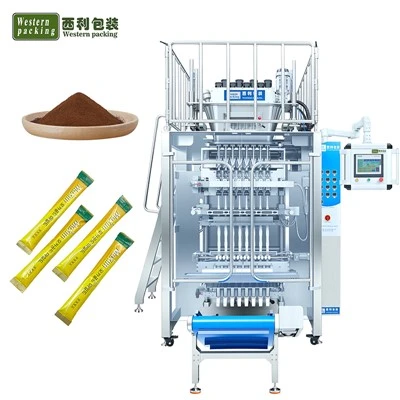
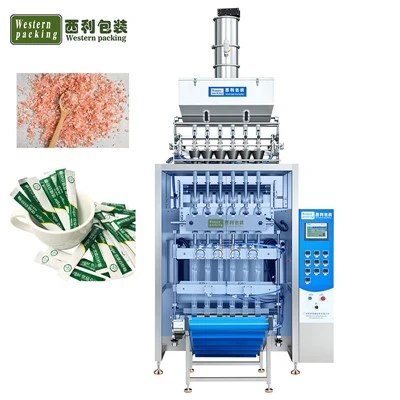
Based on the type of product being packaged, vertical packaging machines can generally be divided into granule, powder, and liquid packaging machines. Granule packaging machines are designed for products such as rice, beans, nuts, confectionery, and tea granules. These products typically have relatively good flowability and can be accurately dosed using an appropriate measuring system. Powder packaging machines are commonly used for products such as flour, seasoning powders, and ground coffee. Because powders can differ significantly in density and flow behavior, the machine needs to be equipped with a suitable dosing system, such as an auger filler, to achieve stable and consistent filling.
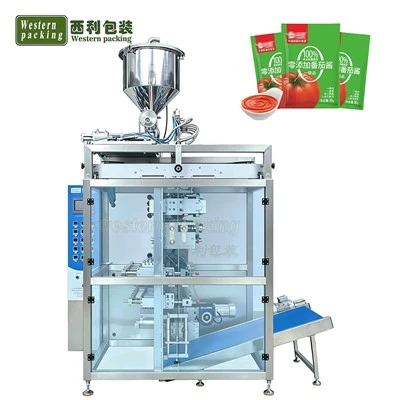
Liquid packaging machines are designed for beverages, sauces, condiments, and other liquid products. Since liquids can vary considerably in viscosity and flow characteristics, the filling and conveying system needs to be selected according to the specific properties of the product. A suitable system helps maintain consistent filling volumes and reliable sealing performance.
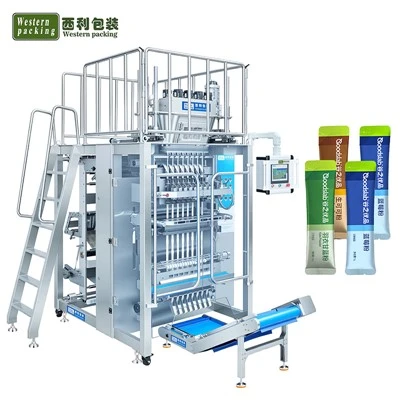
Vertical packaging machines can also be classified by the number of packaging lanes. Single-lane machines generally have a simpler configuration and are suitable for small to medium production volumes or applications with moderate capacity requirements. Multi-lane machines can produce several packages simultaneously, increasing output within the same production period and making them more suitable for manufacturers with higher throughput requirements.

Packaging machines can also differ in bag style and sealing configuration. Depending on the product and packaging material, machines may be designed for center-seal, three-side-seal, or other packaging formats. When selecting equipment, manufacturers should consider product characteristics, package weight, bag dimensions, packaging materials, required production speed, and available floor space.
Guangzhou Western Packing Co., Limited specializes in packaging machinery and related packaging materials, providing automated packaging equipment for different product requirements, including granules and liquids. Its packaging solutions can be configured with functions such as measuring, bag forming, filling, sealing, cutting, and counting to meet different production needs.
Overall, vertical packaging machines are not limited to a single equipment configuration. They encompass a range of machine types designed around different products, capacities, bag formats, and production processes. As packaging requirements become increasingly specialized, selecting a vertical packaging machine that matches the product characteristics and production scale can help manufacturers improve both packaging efficiency and finished-product consistency.