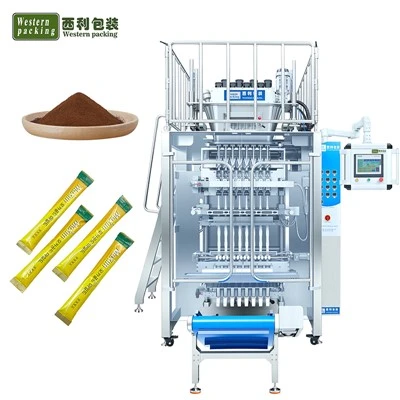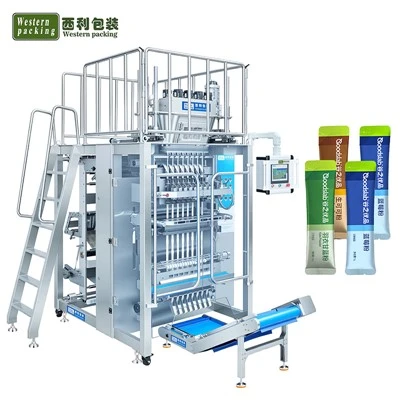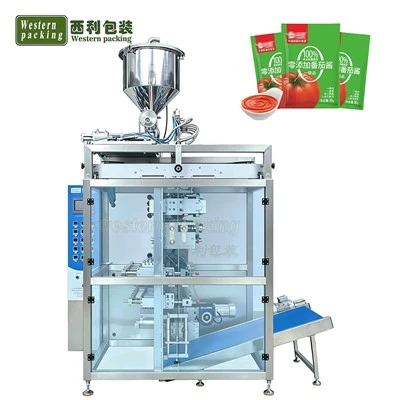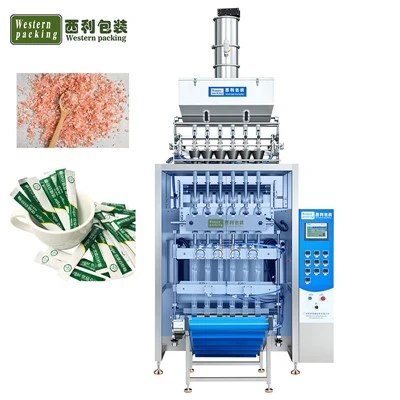


As tea products continue to evolve toward tea bags, single-serve sachets, tea powder, and other convenient formats, manufacturers are placing greater emphasis on packaging efficiency, dosing consistency, and finished-package quality. Tea packaging machines integrate feeding, dosing, bag forming, filling, sealing, and cutting into a coordinated system, providing reliable support for continuous tea packaging operations.
Tea packaging machines generally feature a compact and organized structure, with functional components arranged according to the sequence of the packaging process. Packaging material is supplied through the unwinding and feeding system before entering the forming unit, where the bag structure is created. The package then moves through the filling and sealing stages. A well-organized layout helps reduce the machine's footprint while allowing different operating units to work together smoothly.
The feeding and dosing system is one of the key components of a tea packaging machine. Tea leaves can vary considerably in shape and bulk density, so the machine needs to be equipped with a dosing system suited to the specific product. A stable feeding mechanism delivers the required quantity of tea to the packaging area according to preset parameters, helping maintain more consistent fill quantities across individual packages.
The bag-forming and sealing mechanisms have a direct impact on the appearance and integrity of the finished package. After the packaging material is formed into a bag, longitudinal and horizontal sealing units close the package, while the cutting mechanism separates individual bags. Depending on the characteristics of materials such as filter paper, laminated film, or dedicated tea packaging film, forming and sealing parameters can be adjusted to support different packaging formats.

The control system is another important part of modern tea packaging equipment. Some machines use PLC control systems, stepper motors, and photoelectric tracking technology to coordinate packaging speed, bag length, film positioning, and sealing operations. Automated control allows the different components to follow programmed sequences, improving the continuity and stability of the packaging process.
Overall, tea packaging machines are characterized by a compact structure, well-organized functional layout, flexible feeding and dosing systems, reliable sealing mechanisms, and a relatively high level of automation. As tea packaging requirements continue to diversify, machine structures are expected to become increasingly efficient, stable, and adaptable, providing stronger support for automated tea packaging production.