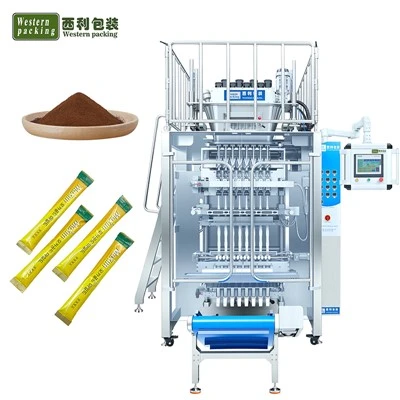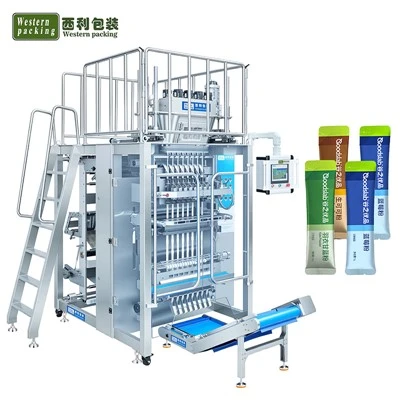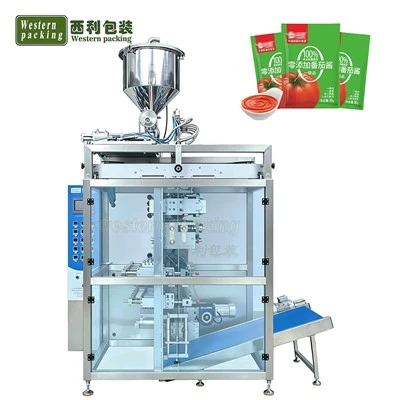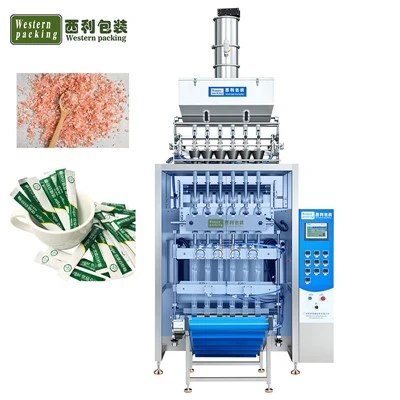


As industries such as food, beverages, tea, coffee, condiments, and daily chemicals accelerate their transition toward automated production, manufacturers are demanding higher levels of efficiency, accuracy, and equipment flexibility. Vertical packaging machines are available in a wide range of models and configurations, and different products require different approaches to feeding, dosing, bag forming, and sealing. Choosing the right machine therefore requires more than simply comparing purchase prices; manufacturers should evaluate the equipment against their actual production requirements.
The first consideration should be the characteristics of the product being packaged. Granules, powders, and liquids have different flow properties, densities, and dosing requirements, so each material needs a suitable feeding and measuring system. Granular products generally require a dosing system designed for free-flowing solids, while liquid products need a filling system that matches their viscosity and flow behavior. Matching the machine to the product is essential for maintaining a stable and consistent packaging process.
Package specifications should also be clearly defined before selecting equipment. Manufacturers should determine the required package weight or volume, bag length, bag width, and packaging format. If the same product is sold in multiple package sizes, it is also useful to consider how easily the machine can be adjusted between different settings. Flexible parameter adjustment can make the equipment more practical for changing production requirements.
Required production capacity is another important factor. Different manufacturers have different output targets, so the machine's operating speed and configuration should be selected according to actual production volume. For high-volume applications, multi-lane packaging equipment may be appropriate because it can produce multiple packages simultaneously. For smaller production runs, a more suitable configuration can help avoid investing in equipment with excessive capacity.

Packaging material compatibility should also be evaluated carefully. Films differ in thickness, composition, and heat-sealing characteristics, and the machine's forming and sealing systems need to be compatible with the selected material. Manufacturers should confirm film specifications and material compatibility before purchasing equipment to reduce potential problems during production.
Other factors, including the level of automation, control system, ease of operation, and after-sales support, should also be considered. A reliable control system can provide more precise control over bag length, operating speed, and product dosing, while responsive technical support can help reduce maintenance difficulties and production downtime.
Guangzhou Western Packing Co., Limited specializes in packaging machinery and related packaging materials, providing automated packaging equipment and solutions for products such as granules and liquids. When evaluating equipment, manufacturers can assess machine configuration, packaging capacity, material compatibility, and application requirements based on their specific production conditions.
Overall, selecting a vertical packaging machine should involve a comprehensive assessment of product characteristics, package specifications, production capacity, packaging materials, automation level, and after-sales support. Choosing equipment that closely matches actual production needs can help manufacturers achieve more efficient, stable, and cost-effective automated packaging operations.