

Hey there,
If you’ve ever worked with powder mixing in pharma, food, chemicals, or even cosmetics, you know how much of a game-changer the right mixer is. As someone who’s been in the double cone blender mixer game for years—watching clients troubleshoot mixes that are off, or fail batch after batch—I can tell you one thing that’s often overlooked: the material of the double cone itself. It’s not just a metal shell; it’s the backbone of how well your powders get blended, and getting that wrong can turn a perfect batch into waste.
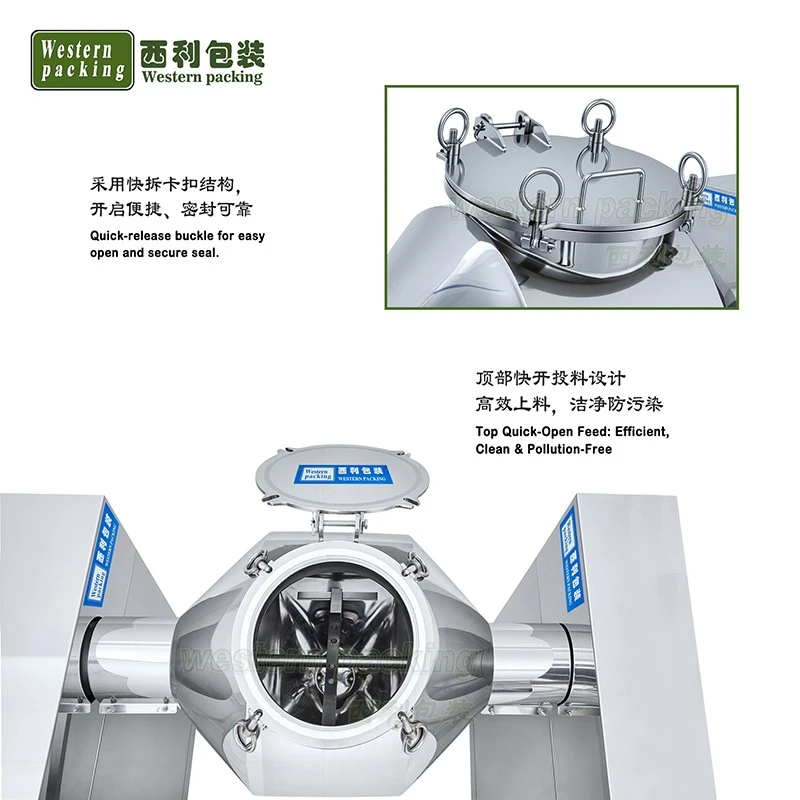
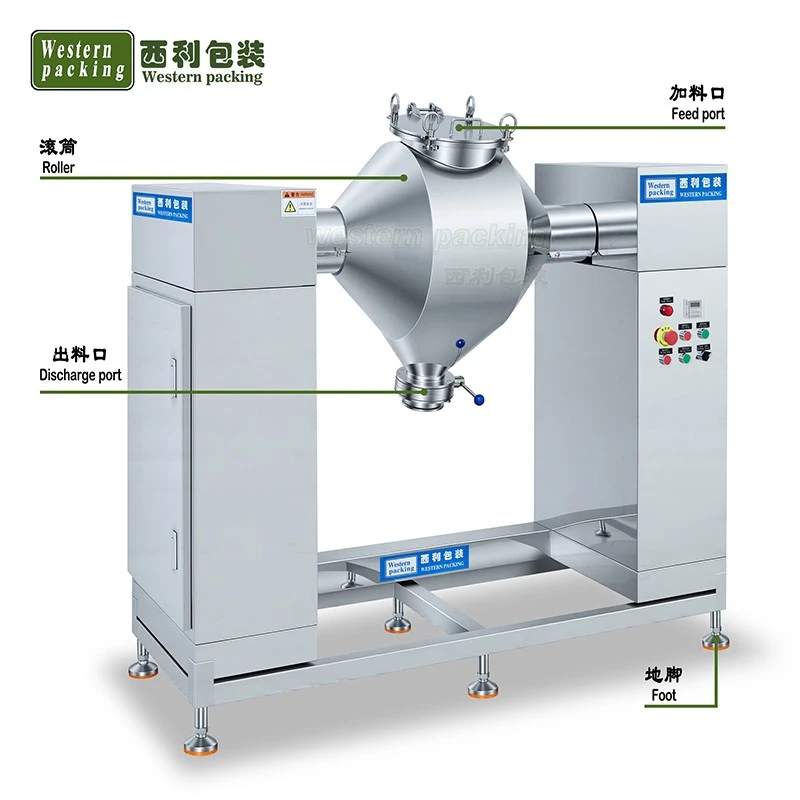
Let me start with the basics. For those new here, a double cone blender works by rotating two conical sections joined at their widest points, creating a gentle tumbling action as materials move up the sides and down the center. But if the cone’s material is wrong, that simple movement goes sideways. I’ve seen clients switch to a “cheaper” metal, only to end up with inconsistent mixes, powder sticking to the walls, or even cross-contamination that shut down production lines. It’s not just about cost—it’s about mixing quality, and that starts with the cone’s material.
First up, let’s talk the most common material we deal with: stainless steel. Not all stainless steel is created equal, of course. 304 and 316 are the workhorses here. 304 is great for general use—food-grade, corrosion-resistant enough for most powders, easy to clean. But when you’re working with acidic foods (think fruit powders, spicy seasonings) or pharma ingredients that need strict biocompatibility, 316 is non-negotiable. Why does this matter for mixing quality? Stainless steel has a smooth, non-porous surface that prevents powder adhesion. If powder sticks to the cone walls, that material doesn’t get mixed into the bulk—you end up with dead spots where concentrations are way off. I had a food client last year who was using a lower-grade steel cone; their vanilla powder kept clinging to the walls, so every batch had areas with way too little vanilla and areas that were overpowering. Switched to our Food Double Cone Mixer with 316L stainless steel (extra smooth for easy cleaning), and their mix consistency went from 85% uniformity to 99% within one batch. That’s the kind of difference the right material makes.
Wait, but what about other materials? I’ve heard people ask about plastic or coated cones for specialized uses. Let’s be real—plastic is super light, but it’s only good for low-shear, non-abrasive mixes. If you’re working with heavy powders or things that have grit (like mineral additives), plastic cones scratch easily, and those scratches trap powder, leading to cross-contamination between batches. We once had a chemical client who tried a plastic cone for their dry pigment mix; after 3 cycles, the cone had small scratches that held pigment, and their next batch came out with a weird color streaks. Coated stainless steel is another option, but only if the coating is FDA-approved and durable. The problem? Over time, coatings can chip, and once that happens, you’re back to adhesion and contamination issues. For most of our clients, stainless steel is the sweet spot— but the grade and finish matter.
Let’s dive deeper into the mix-specific stuff, because the cone’s material affects how the powder moves too. Tumble mixers rely on friction between particles to blend them, right? The smoothness of the cone wall changes that friction. A rougher wall (from low-quality steel or bad finishing) creates more friction on powder particles. That can slow down particle movement—so lighter powders might not rise as they should, or denser powders don’t tumble evenly. I work with a pharma client that mixes active pharmaceutical ingredients (APIs) with excipients; their old cone had a sandblasted finish (cheaper to make) that was too rough. The API, which is a fine, low-density powder, kept getting “stuck” in the rough spots, and their mix uniformity test kept failing. We reworked their Double Cone Blender Mixer with a polished 316L finish, and suddenly the API was moving freely through the tumble—their RSD (relative standard deviation, a key mix quality metric) dropped from 5.2% to 1.8%, which is exactly what regulatory bodies like FDA require.
Corrosion resistance is another big one that ties to material. If your cone corrodes from the materials you’re mixing, you’re not just looking at structural issues—corrosion particles get into the powder, and that ruins the mix (and is a major safety hazard for food/pharma). We had a small spice company that was using a mild steel cone for their chili powder, which has capsaicin that’s mildly acidic. After a few months, the cone started rusting, and their powder had small metal flecks. They had to throw out 12 batches, which cost them thousands. Switched to a Food Double Cone Mixer with 304 stainless steel, and no more corrosion issues—their mix quality stayed consistent, and no more foreign material in their product.
What about niche applications? Like mixing fine, cohesive powders (think nanomaterials or cosmetic pigments) that tend to clump. Some people use coated cones to reduce static, because static makes powders stick even more. But here’s the catch: coatings can wear off, and if you’re working with expensive nanomaterials, a chipped coating could contaminate your entire batch. We worked with a cosmetic brand that tried a PTFE-coated cone for their fine mineral makeup; the coating wore down after 20 batches, and they had to recall a line because of PTFE particles. Now they use a polished 316L cone with a static-dissipative finish that doesn’t flake, and their mix of fine pigment and talc is uniform every time. For those super cohesive powders, the right material can cut down on clumping without risking cross-contamination.
Let’s also talk about maintenance and long-term impact, because that ties back to mix quality over time. Stainless steel cones last way longer than plastic or coated ones, and they hold their finish better. A well-made stainless cone won’t scratch easily, so no dead spots or adhesion issues years down the line. We had a client who bought a cheap double cone mixer from a non-specialized supplier; the cone was made of thin 201 stainless steel (a lower grade that rusts faster). After 2 years, the cone had dented slightly, which changed the rotation dynamics—their mix quality started dropping. They switched to our Cone Blender Mixer with thick 316L, and even after 5 years, it’s still blending as well as day one. The initial cost was higher, but they saved thousands on batch waste and repairs.
Wait, I should mention how to test if your current cone material is causing mix issues. If you’re seeing inconsistent batch results, powder sticking to the walls, cross-contamination between runs, or even weird streaks, it’s worth checking the cone material and finish. Do a simple visual check: run the mixer empty for a minute and see if any powder residue is left. If yes, that’s a sign adhesion is happening, and the material or finish might be off. Also, check for scratches, rust, or chipped coatings—those are dead giveaways that the material is failing.
Here’s the thing I always tell new clients: the double cone isn’t just a container—it’s part of the mixing system. The material doesn’t just affect how long the blender lasts; it directly impacts particle movement, adhesion, corrosion, and ultimately, the uniformity of your mix. We’ve tested this time and again with our Mixing Double Cone Blender line. Whether you’re mixing food powders, pharma excipients, or industrial chemicals, choosing the right cone material is half the battle for good mixing quality.
Now, if you’re in the market for a double cone blender and want to make sure you’re getting the right material for your specific mix, don’t guess. We’ve worked with all kinds of industries, from small artisanal food companies to big pharma manufacturers, and we can help you pick the perfect cone material (304, 316, polished, static-dissipative—you name it) for your powder. Head to our website to check out our full range, including the Cone Blender Mixing Powder and Grain models designed specifically for granular products that need gentle, uniform mixing.
No more guessing if your mixer’s material is holding you back. If you’re tired of batch failures, cross-contamination, or inconsistent mixes, reach out to our team. We’ll walk you through what material works best for your exact application, so you can get the mixing quality you need without the stress.
References:
- "Powder Mixing: Theory and Practice" by S. Kawatra, Society for Mining, Metallurgy & Exploration, 2017.
- "Food Processing Equipment: Selection, Design, and Operation" by R. T. Toledo, CRC Press, 2020.
- "Pharmaceutical Dosage Forms: Tablets, Volume 1" by H. A. Lieberman, L. Lachman, and J. B. Schwartz, CRC Press, 2005.
- "The Impact of Surface Finish on Powder Adhesion in Mixing Equipment" – Journal of Pharmaceutical Sciences, Vol. 108, No. 6, 2019.
- "Corrosion Resistance of Stainless Steels in Food and Pharmaceutical Applications" – Materials Performance, Vol. 57, No. 11, 2018.